Hi Thorsten! ECLASS has finished the initial version of an AI-powered mapping between ETIM and ECLASS. Could you give us a quick overview: What is the background of this project?
Thorsten: Of course! As part of its strategy, the ECLASS Board of Directors has clearly decided to use artificial intelligence as a tool to further develop our Standard. At the same time, we maintain a close collaborative partnership with ETIM. This partnership provides members of both organizations with a technical, machine-readable mapping of these two globally successful semantic standards. Until now, subject matter experts have curated this mapping entirely by hand – an enormously time-confusing task. We’re now stepping in with modern technology to address this issue.
What specifically motivated you to take on this project now?
Thorsten: The initial idea came from our ECLASS expert, Josef Schmelter of Phoenix Contact. He and the ECLASS Head Office came up with the idea of using AI to drastically accelerate and simplify this manual mapping process.
Think of it this way: Both standards are extremely comprehensive and rich in content. A massive amount of data needs to be mapped. Manual mapping quickly reaches its capacity limits. The ECLASS General Assembly immediately recognized the project’s potential and gave it a high priority. For us, this is also a strategic pilot project. We’re developing valuable, innovative knowledge that will serve as a blueprint for many more AI Projects of this kind.
How does AI mapping actually work in practice?
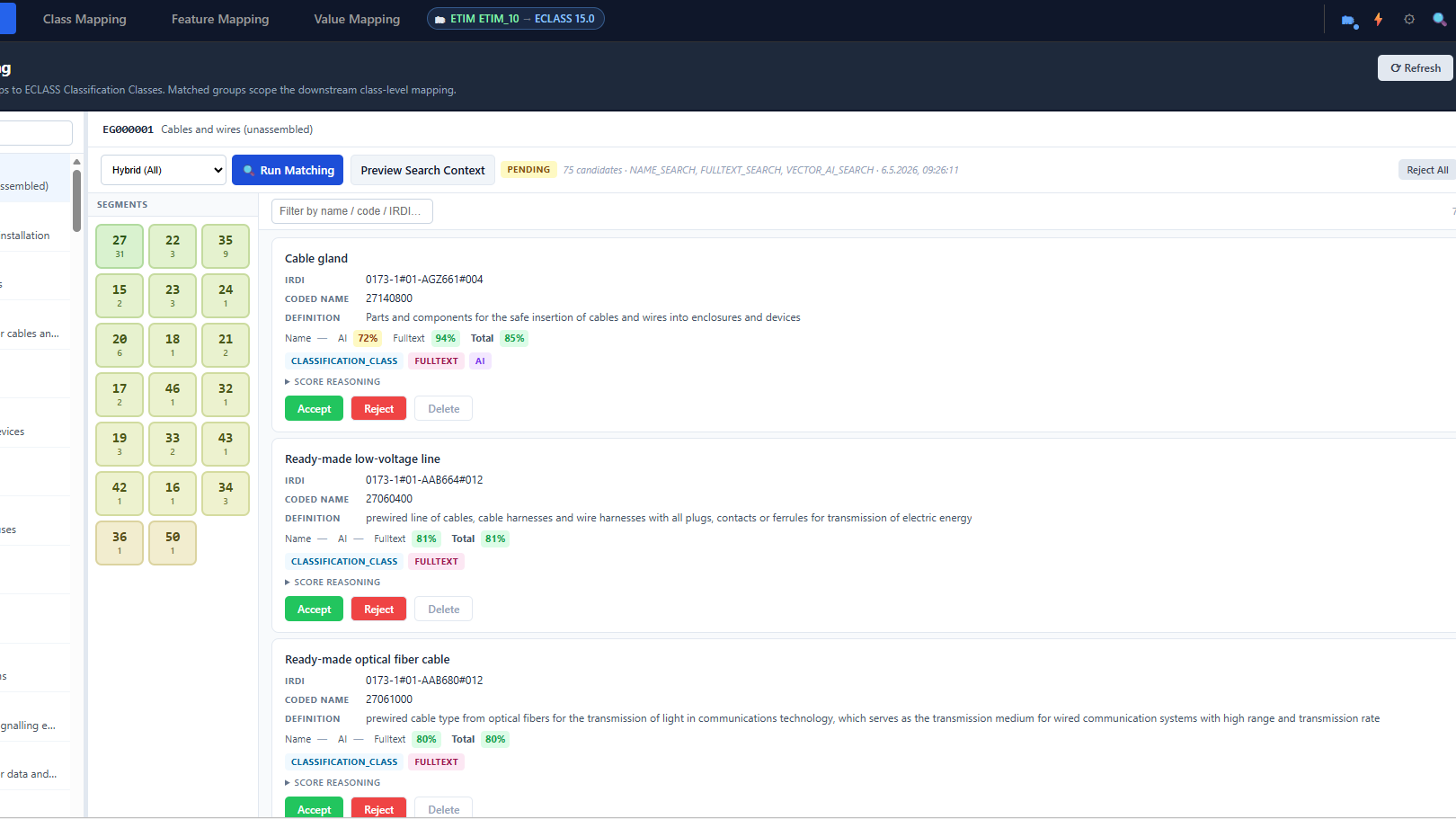
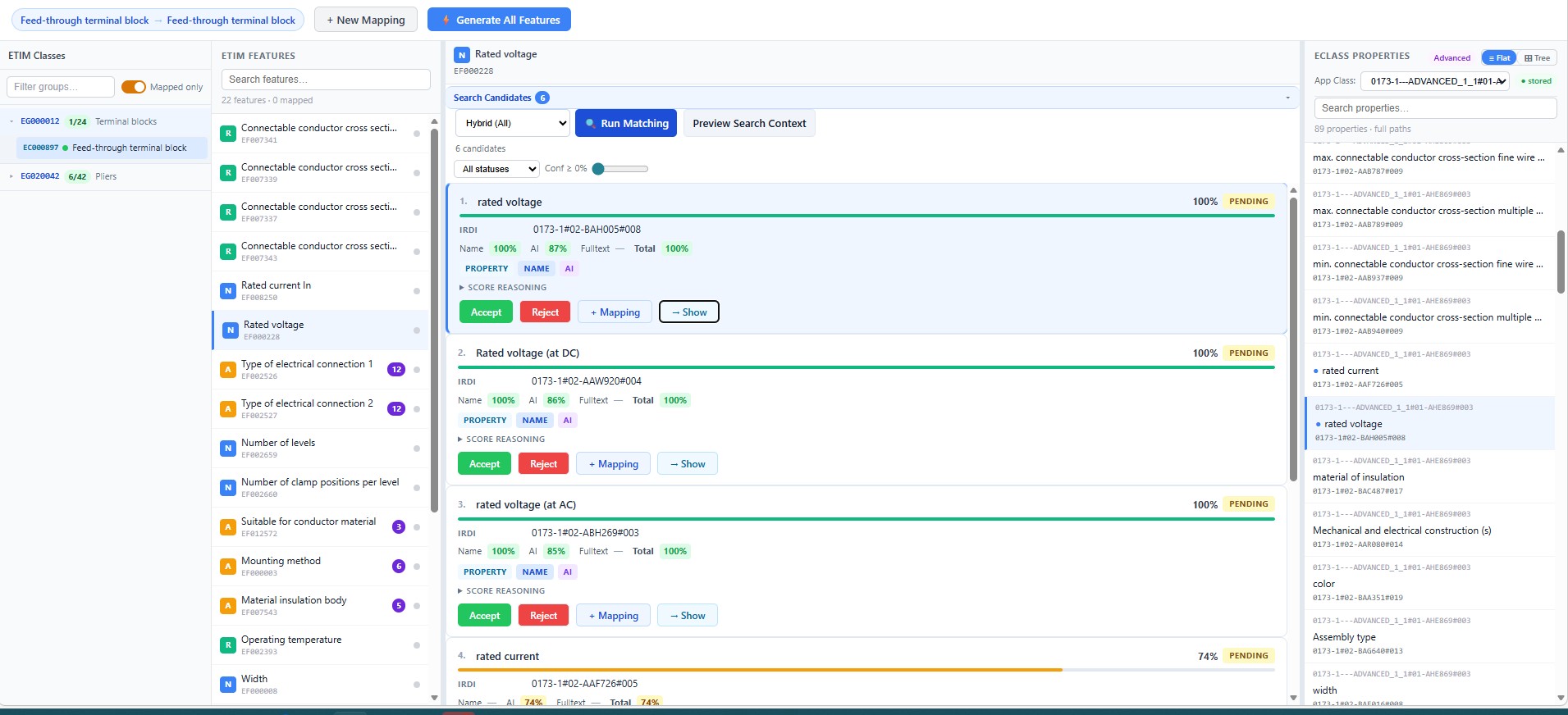
Thorsten: Our ‘ECLASS AI Search’ runs in the background. This AI technology evaluates and assigns intelligent scores to the searched content. In the process, we link ETIM groups to ECLASS classes from the first to the third level. This AI assists by identifying relevant content and narrowing down suggestions precisely. This enables us to evaluate and suggest content matches directly at the class, attribute and even value levels. For example: Many of the ETIM classes to be mapped are in ECLASS Segment 27 (Electrical Engineering, Electronics and Information Technology).
After an expert confirms the initial rough assignment, the system automatically narrows the search space for all subsequent suggestions. Over time, this makes the system increasingly precise. It’s important to note that the AI doesn’t replace anyone’s job, it simply assists. The final decision and definition determination of the mapping still rest with the human expert.